Tap water doesn’t need to taste like bottled water — but it should taste clean, light, and refreshing. Most people can instantly tell when something tastes “off,” even if the water is technically safe. This guide explains what’s normal when it comes to tap water taste, what’s common, and how filtration can help improve flavour without removing healthy minerals.
What Tap Water Should Ideally Taste Like
Good-tasting tap water generally has:
- A neutral flavour
- no noticeable smell
- A smooth, refreshing finish
- No chemical or metallic notes
- Clarity with no visible particles
In other words: you shouldn’t have to think about it — it should just taste clean.
Why Tap Water Tastes Different from Home to Home
Even within the same suburb or street, water can taste different. This is completely normal and often caused by:
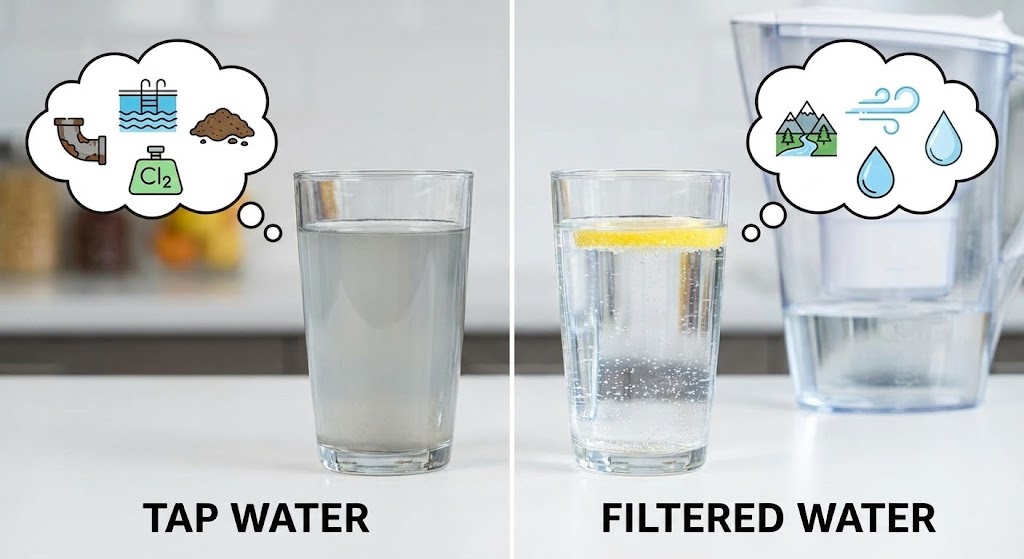
- Household plumbing: Older pipes or hot-water systems can influence taste with slight metallic or earthy notes.
- Chlorine used for disinfection: Melbourne uses chlorine to keep water safe as it travels through the network. This process follows drinking water quality compliance requirements set by Australian health authorities.
- A mild pool-like smell
- A slight chemical taste
- Water sitting in pipes: Water can pick up subtle flavours after sitting in plumbing overnight or during hot days.
- Natural minerals: Calcium, magnesium, and other minerals naturally present in water influence flavour — and this is a good thing.
Common Tap Water Tastes — and What They Usually Mean
Below are common flavours people notice. Most are harmless but can affect enjoyment.
- A Mild Chlorine Taste or Smell: This is one of the most common comments from households. A slight chlorine taste is normal in tap water. Filtration can reduce chlorine to improve taste and smell. Chlorine is essential for keeping water safe, but many people prefer a fresher flavour.
- Metallic or “Penny-Like” Taste. This may come from:
- Older pipes
- Hot water passing through stored tanks
- Dissolved minerals
It’s usually not harmful, but filtration can create a much cleaner taste.
- Earthy or Musty Notes: This flavour can develop when water has interacted with:
- Older plumbing
- Certain minerals
- Organic matter in the network (rare, but possible during seasonal changes)
A carbon filter generally eliminates this flavour very effectively.
- Bitter or Chemical Aftertaste: This is often due to chlorine by-products or buildup in pipes. Filtered water tends to taste significantly smoother.
When Filtration Makes a Noticeable Difference
Filtration is less about safety and more about enhancing the flavour and quality of the water you drink every day. Filtration helps when:
- Tap water has a noticeable chlorine taste
- Water smells “off”
- There are small particles or cloudiness
- Taste varies between taps
- Cleaner water for coffee, tea, and cooking
- Reduced plastic bottle use
- A crisp, refreshing taste you can enjoy every day
Tap water should taste clean and neutral. If it tastes metallic, chlorinated, musty, or bitter, a household filter can improve flavour and freshness. Many homeowners choose filtration to improve tap water taste in Melbourne and enjoy a consistently fresher drinking experience.
Does Filtration Remove Healthy Minerals?
No, not in most home systems. Carbon filters (Zip, Billi, under-sink filters, and whole-home systems) keep natural minerals like:
- Magnesium
- Calcium
- Potassium
These are beneficial and help give water its balanced taste. Only reverse osmosis systems remove minerals, and these are rarely used unless specifically requested.
Why Taste Matters More Than People Think
Better-tasting water leads to:
- More hydration
- Better tasting tea, coffee, and cooking
- More enjoyment for kids
- Reduced bottled water waste
- Cleaner drinking experience
Many families say filtered water becomes their favourite upgrade at home because they feel the difference immediately.
Want Fresher, Cleaner, Better-Tasting Water? We Can Help.
Our team provides:
- Under-sink filtration systems
- Zip and Billi filtered boiling/chilled/sparkling taps
- Whole-home filtration
- Filter replacement and servicing
- CO₂ cylinders for sparkling systems
If you’d like advice on improving your home’s water taste, Melbourne Filtered Water can help with friendly, personalised recommendations.