
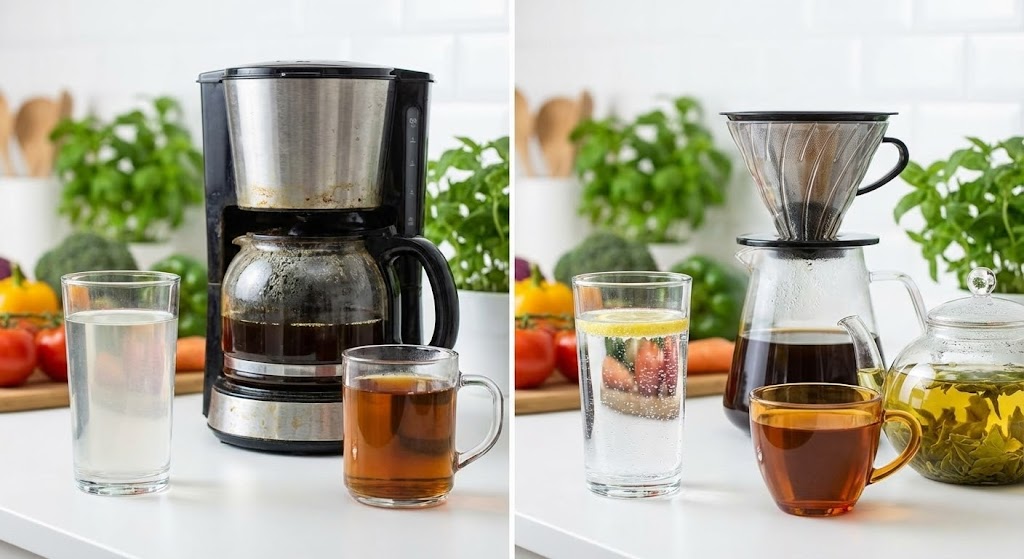
Most people think of filtered water as something you drink on its own — but it has a remarkably big impact on everything you make in the kitchen.
From clearer tea to richer coffee and better-tasting food, filtered water enhances the flavours you rely on every day. This blog explains why.
Why Water Quality Matters in the Kitchen
Water is the foundation of almost everything you prepare:
- boiling
- steaming
- brewing
- simmering
- hydrating ingredients
So when water tastes or smells slightly off (chlorine, metallic notes, bitterness), it directly affects:
- flavour
- aroma
- colour
- texture
Filtered water gives you a cleaner start in the kitchen — especially once you know what affects water quality.
Better Tea — Clearer, Smoother, and More Aromatic
Tea is incredibly sensitive to water quality.
Even small amounts of chlorine or minerals can affect flavour.
With filtered water, tea often becomes:
- brighter in colour
- smoother to drink
- more aromatic
- less bitter
- more consistent across different brews
Yes — filtered water improves tea by reducing chlorine and unwanted tastes, allowing the natural tea flavours to shine through.
Tea lovers often notice the difference instantly.
Better Coffee — Richer Flavour Without Bitterness
Coffee extraction is heavily influenced by the water you use.
Coffee made with filtered water tends to taste:
- richer
- more balanced
- less acidic
- less metallic
- more consistent shot-to-shot
Chlorine and chemical notes can exaggerate bitterness.
Removing these elements creates a cleaner, more enjoyable cup.
Baristas, coffee roasters, and cafés routinely use filtered water for this exact reason.
Better Cooking — Cleaner, More Pronounced Flavours
Because filtered water improves taste and smell, it changes the quality of:
- soups
- rice
- pasta
- vegetables
- stews
- broths
- sauces
Chlorine and sediments can create subtle aftertastes or cloudiness.
Filtered water helps ingredients cook more cleanly and evenly.
Examples:
- Rice becomes fluffier with a more neutral flavour
- Vegetables steam with a fresher aroma
- Soups develop clearer broths
- Pasta sauces taste cleaner
Small differences, big results.
Better Baking — More Consistent Dough and Texture
Bakers often don’t realise that water quality affects:
- dough hydration
- yeast activation
- texture
- crust formation
Filtered water keeps flavours neutral and helps dough behave more predictably.
This matters most for:
- bread
- pastries
- pizza dough
- cakes
It’s a simple upgrade that elevates home baking.
Does Filtering Remove Healthy Minerals Used in Cooking?
No, not in most household systems.
Carbon and sediment filters (such as Zip, Billi, under-sink filters and whole-home systems):
- keep beneficial minerals like calcium and magnesium
- only remove tastes and impurities
- Do not strip nutrition
Your cooking remains wholesome, balanced, and mineral-rich.
Only specialised reverse osmosis systems remove minerals, and these are rarely used unless requested.
Why Restaurants and Cafés Use Filtered Water
Most professional kitchens use filtered water because:
- Boiling and steaming become more consistent
- Coffee machines run cleaner with fewer deposits
- Food tastes purer and fresher
- Equipment lasts longer due to less scale build-up
If it’s good enough for commercial kitchens, it’s a fantastic enhancement for home cooking too.
Everyday Convenience That Makes a Real Difference
When filtered water comes directly from your tap, you enjoy:
- better-tasting hot drinks
- fresher meals
- improved consistency
- less bottled water
- easier hydration for kids and guests
It’s a small change that improves daily life more than most people expect.
Want Better-Tasting Tea, Coffee, and Meals?
Melbourne Filtered Water offers:
- filter replacement and servicing
- under-sink filtration
- Zip & Billi filtered boiling/chilled/sparkling taps
- whole-home systems
- CO₂ cylinders for sparkling systems
Filtered water isn’t just about drinking — it improves nearly everything you prepare in the kitchen. From cleaner coffee to brighter veggies, a home filtration system delivers noticeable results with every use. If you’re exploring options for your home setup, Melbourne Filtered Water offers practical solutions to suit kitchens of all shapes and sizes.